
Ant Control
Ant invasions are no match.
Ants are San Diego's most common household pest — marching along kitchen counters, swarming pet bowls, and trailing across patios and bathrooms after every rain or heat wave. Bite Away targets the colony at the source, not just the visible trail, so the line of ants actually stops coming back.
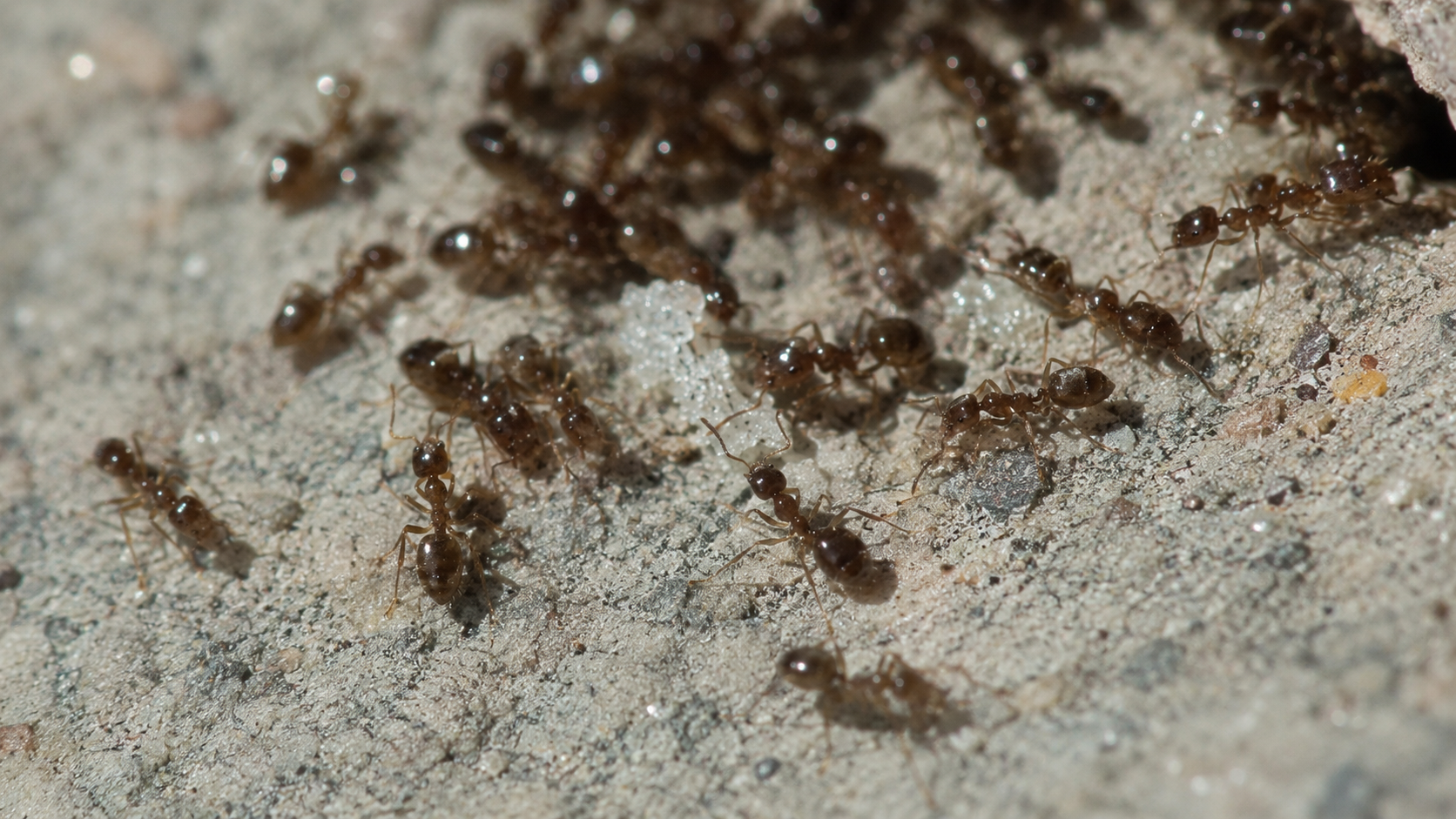
Ants in San Diego
San Diego's mild Mediterranean climate makes the county one of the most ant-friendly regions in the country. Ants stay active year-round here, with activity spiking after winter rains, summer heat waves, and any change that disrupts their outdoor food and water supply — sending them straight into homes, garages, and businesses.
The Argentine ant is by far the most common species in San Diego County. These small, light-brown ants form super-colonies that can stretch across entire neighborhoods, which is why DIY sprays from the hardware store rarely work for long — killing the visible trail just causes the colony to reroute. You may also encounter odorous house ants (which smell faintly like rotten coconut when crushed), pavement ants along driveways and patios, and carpenter ants in older homes and properties with moisture-damaged wood.
Common entry points in San Diego homes include weep holes in stucco, gaps around plumbing and irrigation lines, sliding-door tracks, window frames, and any crack that leads to a food or water source. Coastal communities, canyon-adjacent neighborhoods, and homes near heavy landscaping or fruit trees tend to see the heaviest pressure.
Professional ant control works because it treats the colony, not just the symptom. Bite Away combines species identification, targeted baiting, non-repellent perimeter treatment, and exclusion guidance so the ants you're seeing today don't become the ants you're seeing next month.
Signs you have an ant problem
Steady trails along baseboards, countertops, or window sills are the most obvious sign — but you may also notice piles of fine dirt or sawdust near walls (a carpenter ant clue), small mounds of soil along sidewalks and driveways, or sudden swarms of winged ants indoors, which usually means a mature colony is nearby.
If you're squishing or spraying the same trail in the same spot week after week, it's a sign the colony itself hasn't been treated. A professional inspection identifies the species and the nest location so the next treatment actually resolves the problem.
San Diego ant control FAQs
How much does ant control cost in San Diego?
Ant control pricing in San Diego depends on the size of the property, the species involved, and whether the problem calls for a one-time treatment or an ongoing protection plan. Because every situation is a little different, we don't quote a flat rate online — give us a call and we'll set up a free inspection and provide a no-obligation estimate before any work begins.
Why do I have so many ants in my San Diego home?
San Diego is dominated by invasive Argentine ants, which form massive super-colonies and stay active year-round thanks to our mild climate. Heat waves, dry spells, and winter rains all push ants indoors looking for water and food. Even clean homes get hit, because Argentine ants need very little — a sticky soda ring, a pet bowl, or a leaky pipe is enough.
Why don't store-bought ant sprays work?
Hardware-store sprays kill the workers you can see, but the colony — often thousands of ants and multiple queens — stays intact and simply reroutes the trail. Repellent sprays can actually make Argentine ant colonies 'bud,' splitting into new nests and making the problem worse. Professional ant treatment uses non-repellent products and slow-acting baits that workers carry back to the queen.
Are the ants in my San Diego home dangerous?
Most San Diego household ants — Argentine, odorous house, and pavement ants — don't sting or carry serious disease, but they can contaminate food and become a major nuisance. Carpenter ants are a bigger concern: they don't eat wood like termites, but they tunnel through moisture-damaged framing and can cause structural damage if left alone. If you see large black ants indoors, especially with sawdust nearby, get a professional inspection.
How we tackle it
Identify the species
Argentine, odorous house, carpenter, and pavement ants each call for a different treatment approach.
Treat the colony
We use targeted baits and non-repellent products that workers carry back to the queen — eliminating the nest, not just the trail.
Seal the highways
Exterior perimeter treatment plus crack-and-crevice work along baseboards, plumbing, and entry points keeps the next wave outside.
Get started today
Tell us about your property and we'll get a technician out fast.