
Earwig Control
Pinchers in the garden? Not for long.
Earwigs are one of the most misunderstood pests in San Diego. Those intimidating pincers look scary, but the real problem is how quickly they multiply in damp mulch, ground cover, and crawl spaces, then make their way into bathrooms, laundry rooms, and garages. Bite Away targets the harborage areas where earwigs actually live, not just the ones you see indoors.
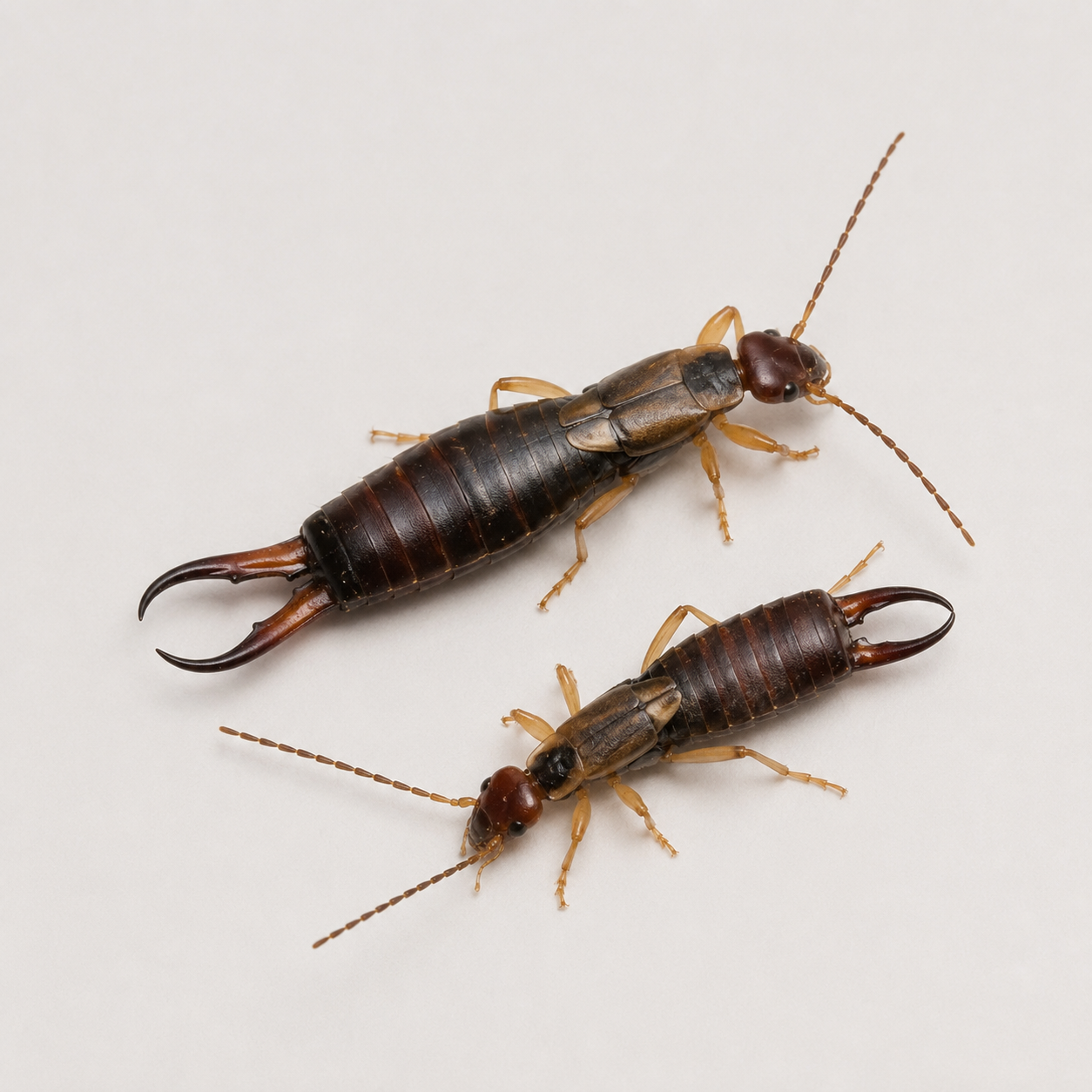
Earwigs in San Diego
Earwigs thrive in San Diego thanks to our mild Mediterranean climate, regular landscape irrigation, and the dense ground cover common in San Diego County neighborhoods. While they're most active in spring and summer, our coastal humidity and year-round watering schedules mean earwig populations rarely die back the way they do in colder climates. Many homeowners see them on patios and inside garages well into the fall.
The European earwig (Forficula auricularia) is the species most San Diego residents encounter. They're nocturnal, hide during the day under mulch, planters, stones, woodpiles, and decorative ground cover, and come out at night to feed on decaying plant matter, seedlings, fruit, and other small insects. They don't sting and they don't crawl into ears (despite the myth) but their pincers, sudden appearance in sinks and bathtubs, and tendency to swarm under doormats and patio furniture make them one of the most reported nuisance pests in San Diego.
Earwigs get into San Diego homes through gaps under exterior doors, weep holes in stucco, foundation cracks, crawl-space vents, and around plumbing penetrations. Heavily landscaped properties, homes with irrigation along the foundation, coastal neighborhoods, and houses backing up to canyons or open space tend to see the heaviest pressure. Once inside, they're drawn to damp areas. Think bathrooms, laundry rooms, kitchens, and basements.
Professional earwig control works because it treats the outdoor harborage where the population actually lives. Bite Away combines exterior perimeter treatment, targeted granular baits in mulch and ground cover, exclusion work along doors and vents, and recommendations for reducing moisture and harborage around the foundation, so the earwigs you're seeing today don't keep coming back next week.
Signs you have an earwig problem
The most obvious sign is finding earwigs themselves, in bathtubs and sinks (they get trapped after coming up through drains or wandering in at night), under doormats, inside garages, or scattered across patios after dark. You may also notice ragged, irregular holes in seedlings, leafy greens, and soft fruit in the garden, or small dark droppings near baseboards and in damp corners.
If you're seeing earwigs indoors regularly, it almost always means there's a much larger outdoor population in the mulch, ivy, or ground cover near your foundation. Treating only the indoor sightings rarely solves the problem. A professional inspection identifies the harborage areas and entry points so treatment actually resolves the issue.
San Diego earwig control FAQs
How much does earwig control cost in San Diego?
Earwig control pricing in San Diego depends on the size of the property, the amount of landscaping and ground cover around the foundation, and whether you need a one-time treatment or an ongoing protection plan. Because every property is a little different, we don't quote a flat rate online — give us a call and we'll set up a free inspection and provide a no-obligation estimate before any work begins.
Are earwigs dangerous? Do they really crawl into your ears?
The 'crawling into ears' story is an old myth — earwigs don't seek out human ears and they don't lay eggs in your head. They don't sting and they aren't known to transmit disease. Their pincers can deliver a mild pinch if you pick one up, but it rarely breaks the skin. The real issue is the nuisance factor: large populations indoors, damaged seedlings and garden plants, and the unsettling experience of finding them in sinks and tubs.
Why do I suddenly have so many earwigs around my San Diego home?
Earwig populations explode when conditions are right: damp mulch, dense ground cover, regular irrigation, and shady harborage areas near the foundation. San Diego's landscaping style — bark mulch, ivy, succulents, and drip irrigation along the house, creates ideal earwig habitat. Heat waves and dry spells also push them indoors looking for moisture, which is why most homeowners notice a sudden influx in summer evenings.
Why don't store-bought sprays solve my earwig problem?
Hardware-store sprays kill the earwigs you can see, but the bulk of the population, often hundreds or thousands of insects, is hiding under mulch, in ivy beds, and along the foundation where contact sprays never reach. Professional earwig treatment combines granular products that penetrate the harborage areas, residual perimeter treatment along the foundation, and exclusion work on doors and vents so new earwigs can't get back in.
How we tackle it
Find the harborage
Earwigs hide in mulch, leaf litter, ivy, woodpiles, and under planters. We identify the source, not just the symptom.
Targeted perimeter treatment
Granular and liquid treatments along foundations, flower beds, and damp zones knock down active populations.
Seal entry points
Door sweeps, weep screens, weather stripping, and crawl-space vents are common earwig highways into the home.
Get started today
Tell us about your property and we'll get a technician out fast.