
Rodent Control · Sep 18, 2026
Rodent exclusion vs. rodent trapping: which solution is right for your home?
Trapping removes the rodents already inside your home, exclusion keeps new ones out. Here is how the two services work together in San Diego County.
By Philippe Heller, President · Bite Away Termite & Pest Control · Serving San Diego since 2005
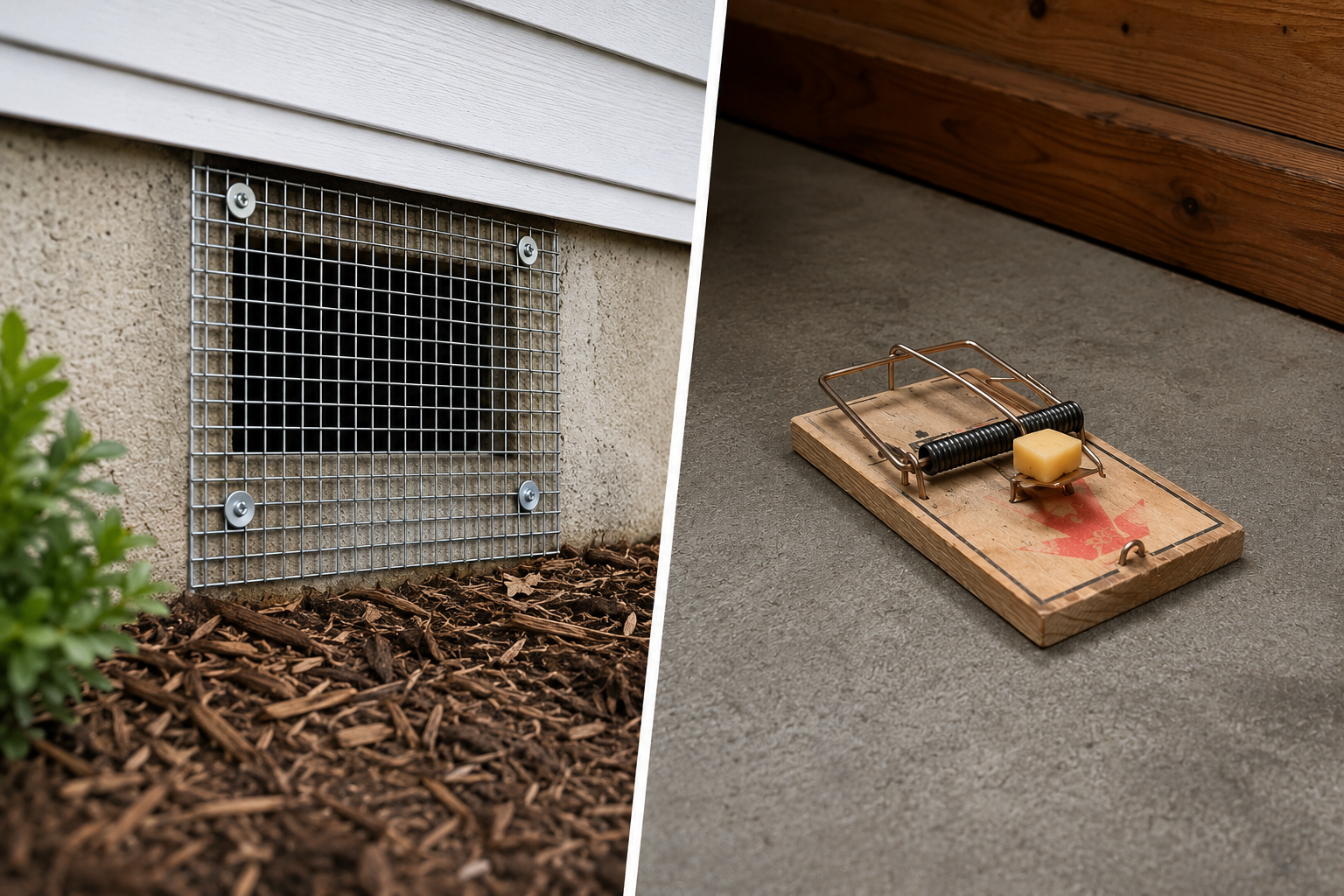
Hearing scratching noises in your attic or finding rodent droppings in the garage is enough to make any homeowner uncomfortable. One of the first questions we hear is, "Do I need trapping, exclusion, or both?"
The answer depends on your home and the extent of the infestation, but understanding the difference between rodent trapping and rodent exclusion can help you make the right decision and prevent rodents from becoming a recurring problem.
What Is Rodent Trapping?
Rodent trapping focuses on removing rats or mice that are already inside your home.
Professional trapping uses strategically placed traps in areas where rodents are actively traveling, nesting, or feeding. The goal is to eliminate the existing population as efficiently as possible.
While trapping is an important first step, it does not prevent new rodents from entering the structure.
If entry points remain open, it's only a matter of time before new rodents move in.
What Is Rodent Exclusion?
Rodent exclusion is the process of identifying and sealing the openings rodents use to access your home.
Rats and mice can squeeze through surprisingly small gaps around rooflines, attic vents, utility penetrations, garage doors, plumbing lines, and foundation openings.
Professional exclusion involves a detailed inspection of the home's exterior followed by sealing vulnerable entry points with durable materials designed to withstand weather and future rodent activity.
Think of exclusion as preventing the next infestation before it starts.
Why Many Homes Need Both
One of the biggest misconceptions homeowners have is believing trapping alone permanently solves the problem. In reality, trapping removes the rodents currently inside the home, while exclusion helps prevent new ones from replacing them. For many homes throughout San Diego County, combining both services provides the most effective long-term solution.
Why Rodents Are So Common in San Diego
San Diego's mild climate allows rodents to remain active throughout the year. Neighborhoods near canyons, open spaces, parks, and golf courses often experience increased rodent pressure as rats and mice move between natural habitats and residential communities. As temperatures cool during the fall and winter months, rodents become even more motivated to seek shelter inside homes.
Signs You May Need Rodent Services
Rodent problems aren't always obvious. Some of the most common warning signs include scratching sounds in walls or ceilings, droppings, chewed food packaging, damaged insulation, nesting materials, or grease marks along baseboards.
The earlier these signs are addressed, the easier it is to prevent a larger infestation.
A Long-Term Approach to Rodent Control
At Bite Away Termite & Pest Control, we believe successful rodent control goes beyond simply removing what's already inside your home. Our team evaluates your property, identifies potential entry points, recommends exclusion measures, and develops a treatment plan tailored to your specific situation. By combining trapping with preventative exclusion, homeowners gain greater peace of mind and long-term protection.
Schedule a Rodent Inspection
If you've noticed signs of rodents around your home, don't wait until the problem grows. Contact Bite Away Termite & Pest Control today to schedule a professional rodent inspection and learn how trapping and exclusion work together to protect your home throughout San Diego County.
Need help from a local pro?
Bite Away has served San Diego and Temecula since 2005. Free residential termite inspections and a pest-free guarantee.